
InfoQ Presentation Review | Zetuo Tech CEO Zhao Wei: A Fresh Perspective on Selection of Distributed Databases
InfoQ Presentation Review | Zetuo Tech CEO Zhao Wei: A Fresh Perspective on Selection of Distributed Databases
On July 21st, the global tech community convened at the ArchSummit Global Architect Summit in Shenzhen, where Zetuo Tech's Founder & CEO, Zhao Wei, delivered an engaging presentation titled "New Approaches to Database Application and Management in the Era of Distributed Databases."
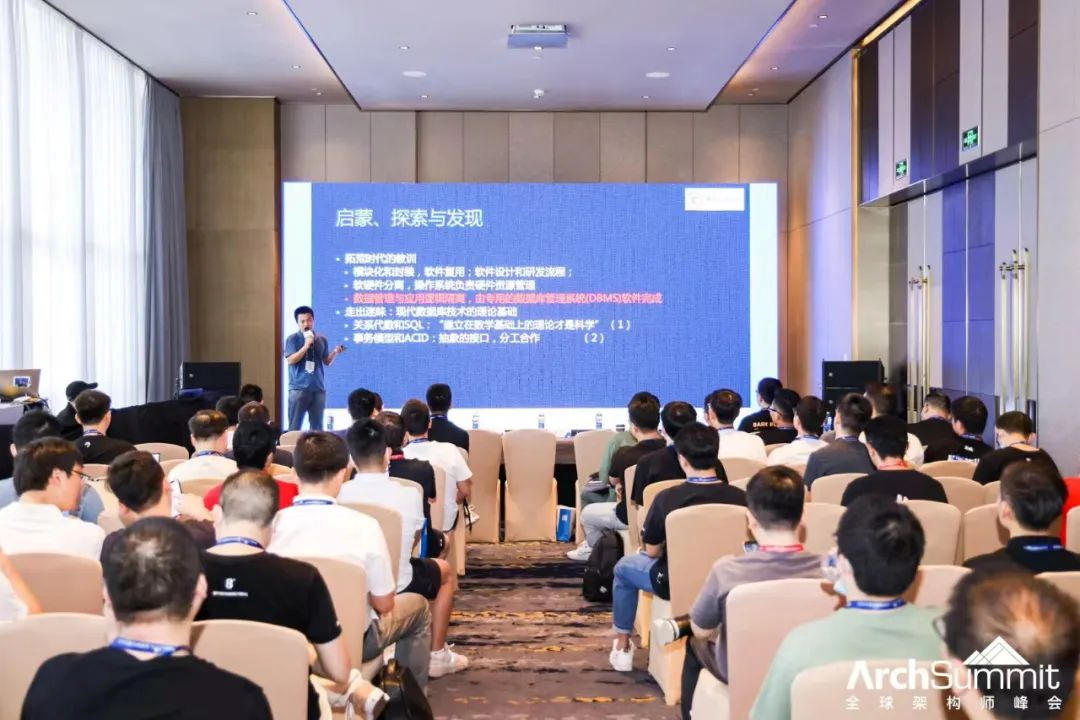
Drawing the audience through a captivating journey, Zhao Wei delved into the annals of database system evolution, extracting invaluable insights from the trailblazing experiences of IT pioneers. This cornerstone wisdom? Data management must be isolated from application logic and carried out by specialized Database Management System (DBMS) software.
In an epoch marked by the rapid surge of mobile internet and artificial intelligence, coupled with the deep-seated progress of informationization, digitization, and intelligence in various industries, a burgeoning number of companies face the challenge of effectively managing and utilizing growing amounts of data. Traditional centralized database management systems, once stalwarts, now find themselves outpaced. They encounter significant challenges in handling data read/write access and transaction processing loads in high-concurrency scenarios, as well as providing automated fault recovery capabilities.
This dilemma stems from the lack of automatic horizontal scaling—a disparity that single-server performance is powerless to rectify. Thus, traditional databases falter in the face of these surmounting challenges.
Faced with this quandary, the industry was compelled to turn partially towards NoSQL databases around the turn of the century, sacrificing general transaction processing and SQL query capabilities in exchange for elastic scalability and enhanced performance, using server clusters to handle high-concurrency data access loads.
However, over the years of application system development, application developers painfully discovered that the capabilities discarded by NoSQL databases were crucially important. Many application scenarios involve treating multiple read/write operations as a logical atomic operation—namely, a transaction. The single-row transaction atomicity of NoSQL falls short. Moreover, developing query capabilities with NoSQL incurs significant workloads, leading to extreme software maintenance difficulties, substantial time and manpower expenses, and substantial risks to system quality and project timelines.
As developers repeatedly implemented SQL query functionalities on a case-by-case basis, they were violating a fundamental principle of software development. This led the internet industry to attempt a return to relational databases as early as 2010, often relying on sharding middleware or application-level sharding. However, this transition merely led from one pitfall to another, with application systems development remained intricate, and the entrenched issues remained unvanquished. It wasn't until this year that a beacon of hope emerged: the advent of distributed databases.
An exceptional distributed database should encapsulate data management entirely, exposing a simplified interface—SQL—to application software. Developing application systems based on a distributed database is then indistinguishable from doing so with a traditional database. Simultaneously, users gain horizontal elastic scalability, financial-grade reliability, and other capabilities. KunlunBase, a paragon of distributed database prowess, fittingly embodies these tenets.
With riveting articulation, Zhao Wei proceeded to introduce the architecture, core features, and technical implementation of KunlunBase, with a particular focus on its array of advanced SQL functionalities.
The illustration of architecture of Klustron (also known as KunlunBase) is as follows:
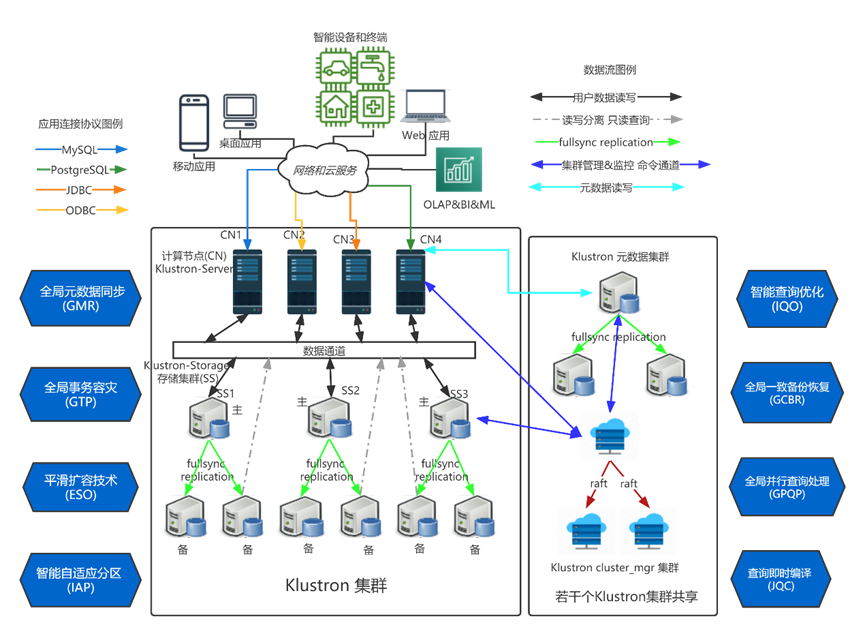
KunlunBase, a distributed database management system, supports mixed OLTP and OLAP workloads, catering to various data models including relational and JSON data. Designed to store, manage, and leverage vast amounts of data, it excels in high-performance transaction processing and analytical tasks. It boasts horizontal elastic scalability, financial-grade reliability, compatibility with the latest SQL standards, and support for MySQL and PostgreSQL connection protocols and syntax. With comprehensive data security mechanisms, it provides high-performance transaction processing and data read/write capabilities in high-concurrency heavy-load scenarios.
Yet, it's not just about brawn; KunlunBase demonstrates its wits through an intricate dance of data security. It parades a comprehensive ensemble of data security storage, access control, and data validation capabilities. DBAs can establish multi-level and multi-granular access control rules. They can also enable encryption for data files, log files, and network connections to ensure secure data access. But wait, there's more—validation rules can be defined for each table, guaranteeing that the data stored in the database system aligns seamlessly with user needs and business logic.
Zhao Wei then outlined a series of crucial capabilities that need to be considered when selecting a distributed database system. Unquestionably, the foundation stones are horizontal elastic scalability and financial-grade reliability. This dynamic duo lays the groundwork for premium data management services. Additionally, comprehensive data analysis capabilities are desirable to serve as foundational data sources (ODS) for data warehouses. A trump card is the ability to analyze the latest business data, which paves the path for lightning-fast responses, from risk assessment to savvy recommendations.
Zhao Wei is quick to spotlight the stars within the constellation of advanced SQL features. Multi-level access control, views, materialized views, CHECK constraints, domains, and Row Level Security (RLS) are key essential functions, with stored procedures and triggers being important optional features. He also detailed the utility and value of each advanced SQL feature. While these advanced SQL capabilities have been present and widely employed in classic database systems for many years, their enduring relevance and advantages have been proven. These features remain highly valuable in distributed database systems, although certain distributed database systems lack some advanced SQL features. KunlunBase incorporates all these advanced SQL features, positioning it as an exceptional enterprise-grade distributed database system.
As the final curtain falls, Zhao Wei extends his counsel to application architects and DBAs in the era of distributed database systems. The stage is set for selecting the ideal distributed database system as the bedrock of robust application systems. The clarion call resounds: harness the full potential of distributed database systems to elevate application design and development benchmarks. Sharpen the edge of database operation and maintenance expertise, ensuring a safeguarded voyage towards sustainable business expansion and dependable operations, while yielding a bountiful harvest of enterprise value.